Prohibited Plants Identifier
Learn how to identify Toronto's prohibited plants and how to remove them safely. Compare their seasonal appearance, check hazard levels, and follow resident-friendly removal steps.
This page is for general educational and reference purposes only. Identification results are not a legal determination. Always confirm prohibited plant information using official City of Toronto resources, and seek professional advice for hazardous species or large infestations.
Quick Compare: Toronto Prohibited Plants
A side-by-side reference for all 10 prohibited plants.
| Plant | Key visual clue | Season visible | Hazard | Easiest to identify | Easiest to remove | Details |
|---|---|---|---|---|---|---|
| Canada ThistleCirsium arvense | Small purple flower clusters on spiny stems | Late spring to late summer | Moderate | Summer (in flower) | Spring (young growth) | View |
| Buckthorn (Common & Glossy)Rhamnus cathartica / Frangula alnus | Stays green late in fall; black berries; curved leaf veins | Spring through late fall | Moderate | Fall (still green) | Fall, or any time for small seedlings | View |
| Dog-Strangling VineCynanchum rossicum / Cynanchum louiseae | Twining vine with dark star flowers and fluffy-seed pods | Late spring to early fall | Moderate | Summer (flowers/pods) | Spring (dig roots) | View |
| Garlic MustardAlliaria petiolata | Garlic smell; white four-petal flowers; scalloped leaves | Early spring to early summer | Moderate | Spring (in flower) | Spring (hand-pull) | View |
| Giant HogweedHeracleum mantegazzianum | Giant white umbrella flowers on a blotchy, hairy stem (2–5 m) | Late spring to summer | Extreme | Summer (in flower) — from a distance | Professional removal recommended | View |
| Japanese KnotweedReynoutria japonica var. japonica | Bamboo-like speckled hollow stems; creamy flower sprays | Spring shoots to fall canes | High | Late summer (in flower) | Very hard — early/small patches only | View |
| Phragmites (European Common Reed)Phragmites australis subsp. australis | Very tall reed with feathery plumes in dense stands | Summer to winter (stands persist) | Moderate | Late summer (plumes) | Summer, small dry-ground patches | View |
| Poison IvyToxicodendron radicans | 'Leaves of three'; reddish spring growth; red-orange in fall | Spring to fall (vines visible in winter) | High | Summer (clear three-leaflet pattern) | Spring (smaller plants) — with full protection | View |
| Purple LoosestrifeLythrum salicaria | Bright magenta-purple flower spikes in wet areas | Summer to early fall | Moderate | Summer (in bloom) | Early summer (dig before seeding) | View |
| Ragweed (Common)Ambrosia artemisiifolia | Fern-like leaves; plain green flower spikes (no petals) | Summer to fall | Moderate | Late summer (flower spikes) | Mid-summer (before flowering) | View |
Browse Prohibited Plants
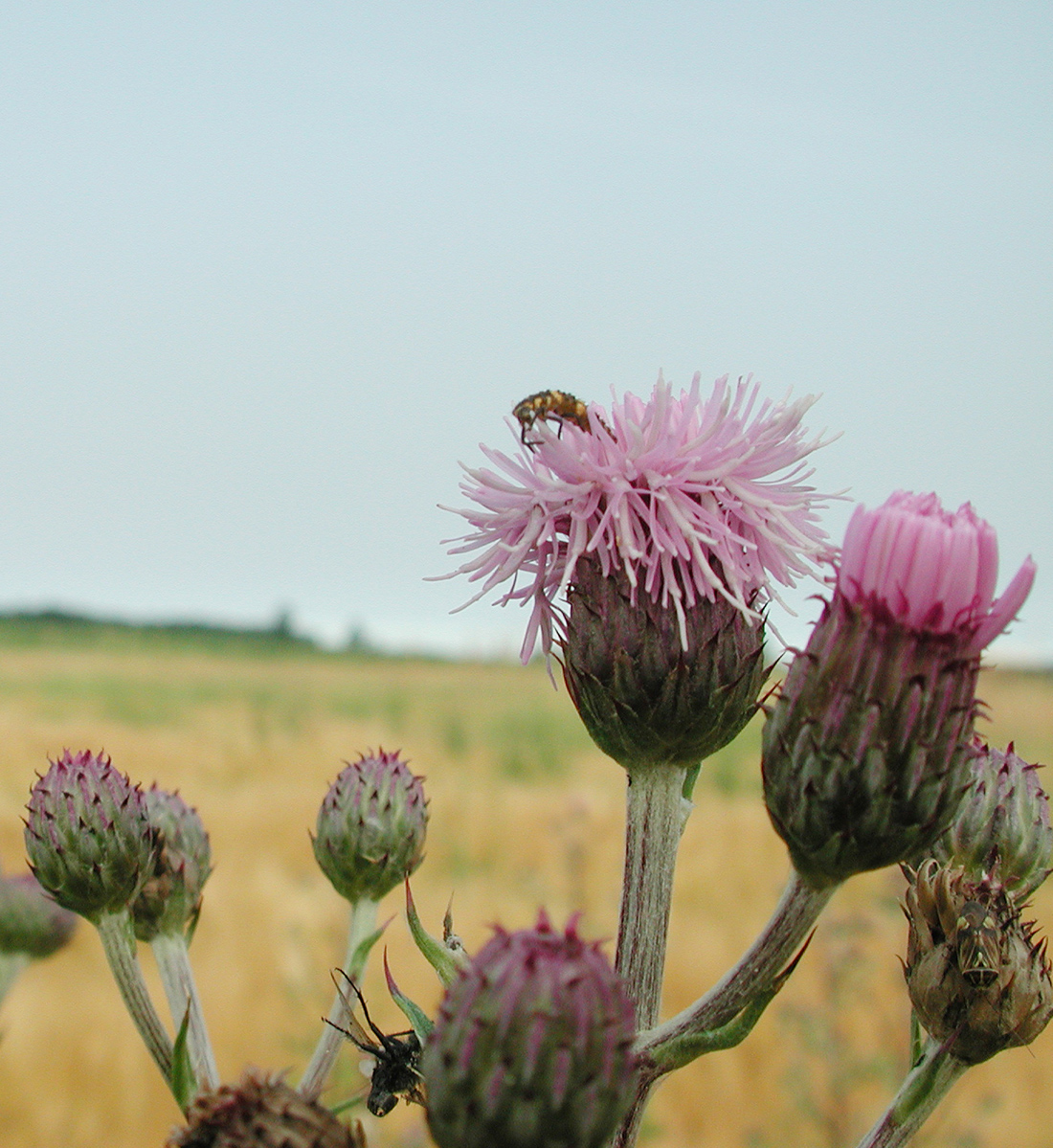
Canada Thistle
ModerateCirsium arvense
A spiny, deep-rooted perennial weed with small purple-pink flower heads. It spreads quickly by creeping underground roots and by fluffy, wind-blown seeds, forming dense patches.
Invasive spreadChokes out nativesSummer (in flower)View plant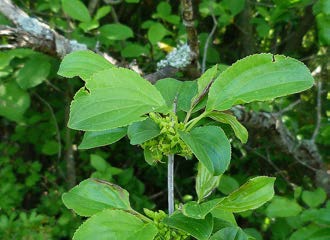
Buckthorn (Common & Glossy)
ModerateRhamnus cathartica / Frangula alnus
A tall shrub or small tree that invades yards, hedgerows, and ravines. It leafs out early and keeps its green leaves late into fall, and its black berries are spread widely by birds.
Invasive spreadChokes out nativesFall (still green)View plant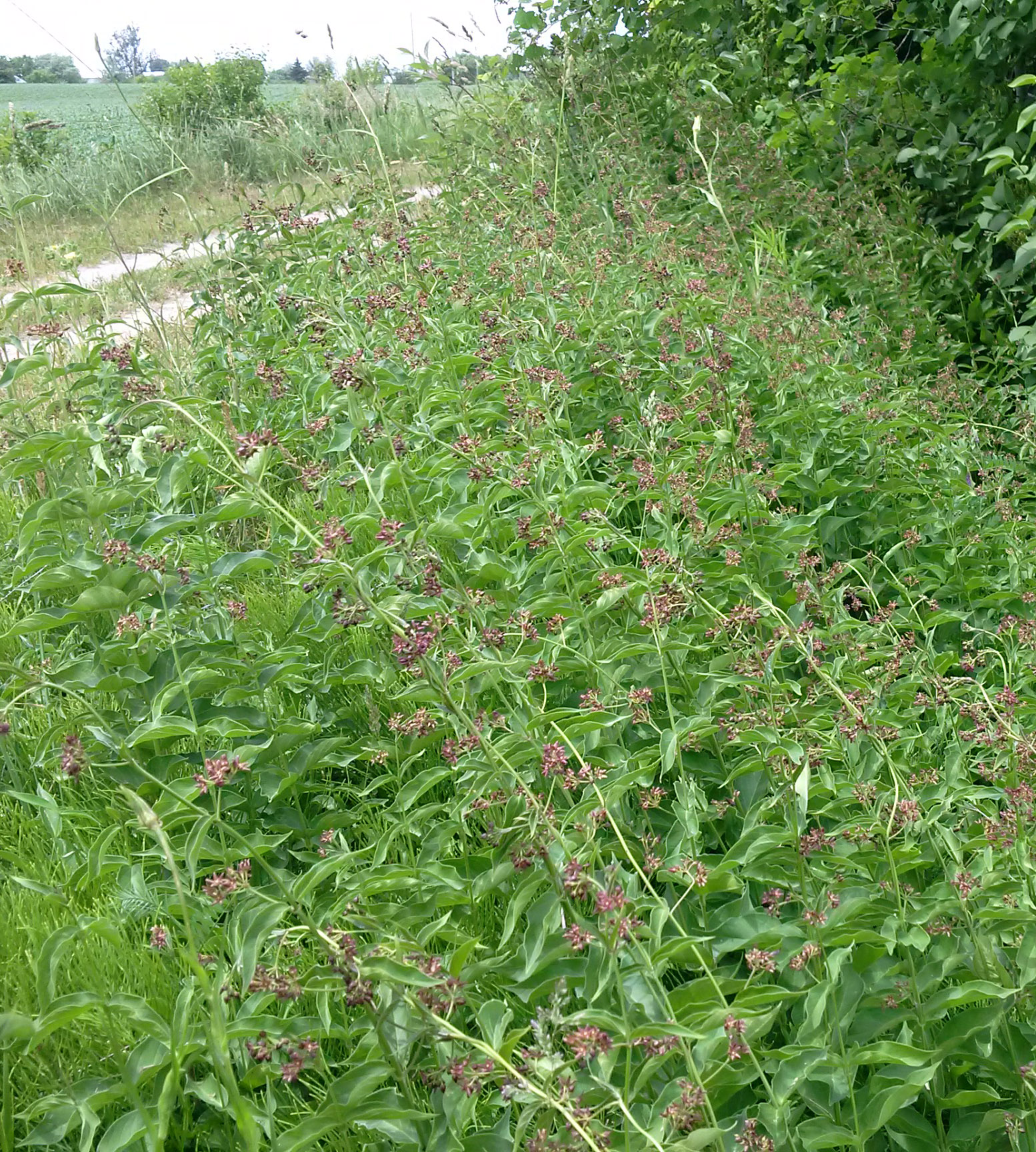
Dog-Strangling Vine
ModerateCynanchum rossicum / Cynanchum louiseae
A twining perennial vine in the milkweed family that smothers other plants. It forms dense mats, climbs over vegetation, and releases fluffy wind-blown seeds from slender pods.
Invasive spreadChokes out nativesSummer (flowers/pods)View plant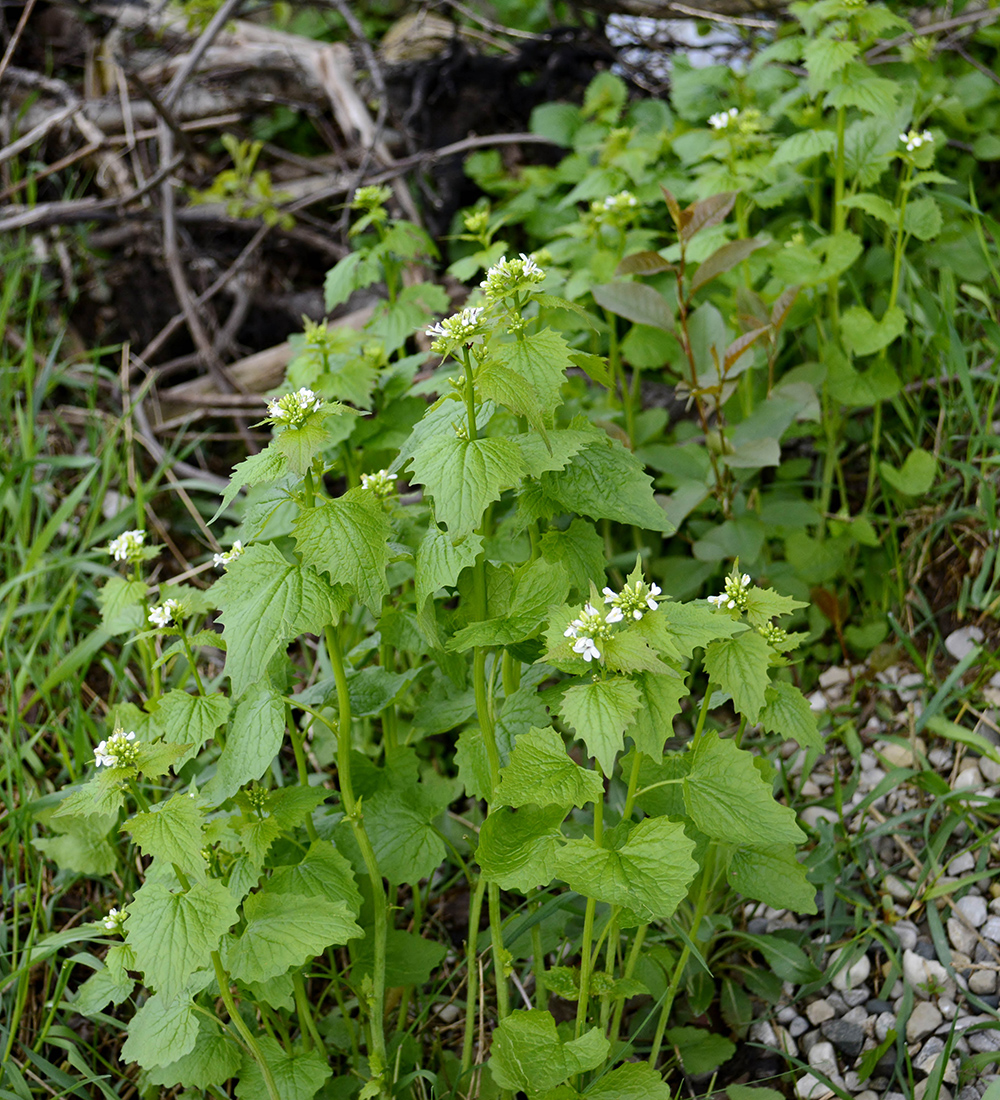
Garlic Mustard
ModerateAlliaria petiolata
A biennial woodland-edge weed that smells of garlic when crushed. It grows as a low rosette in its first year and sends up a tall flowering stem with small white flowers in its second spring.
Invasive spreadChokes out nativesSpring (in flower)View plant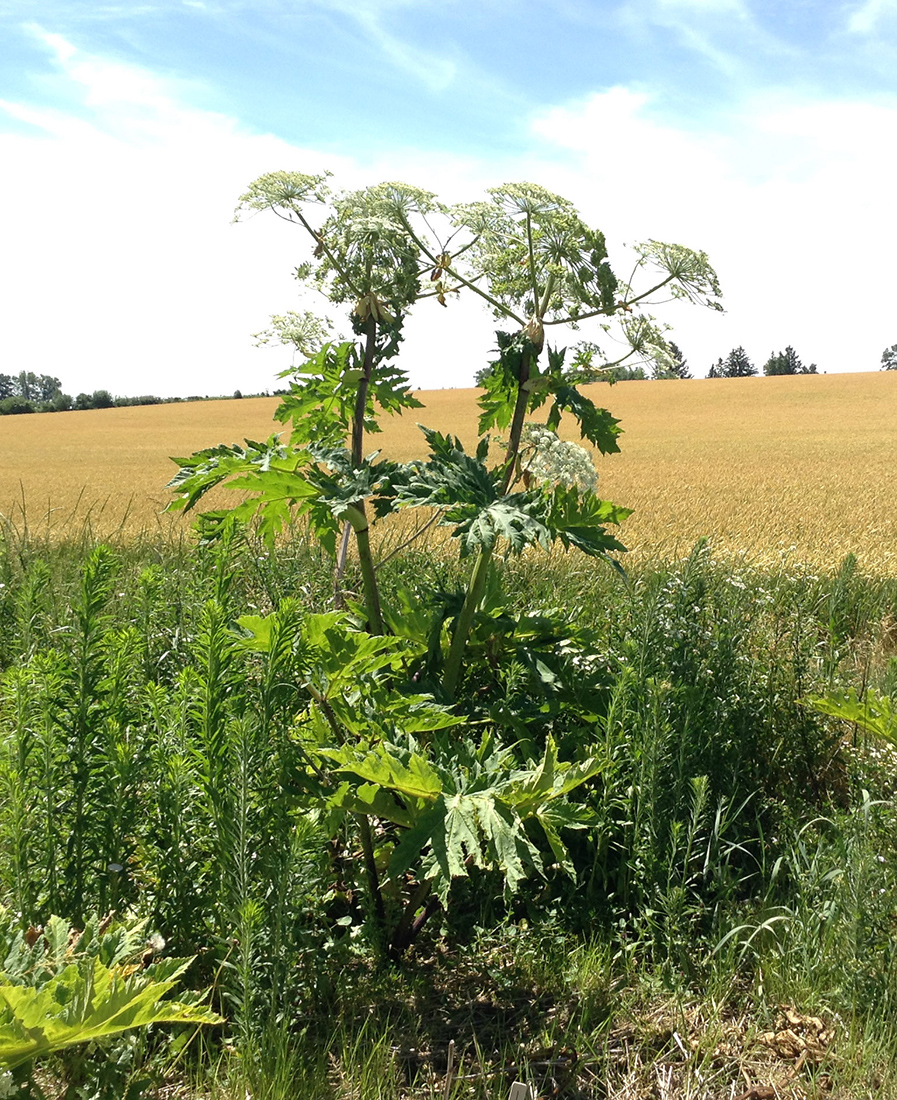
Giant Hogweed
ExtremeHeracleum mantegazzianum
A very large, hazardous plant with thick blotchy stems and huge white umbrella-shaped flower heads. Its watery sap can cause severe skin burns and blisters when skin is exposed to sunlight afterward.
Skin irritationInvasive spreadSummer (in flower) — from a distanceView plant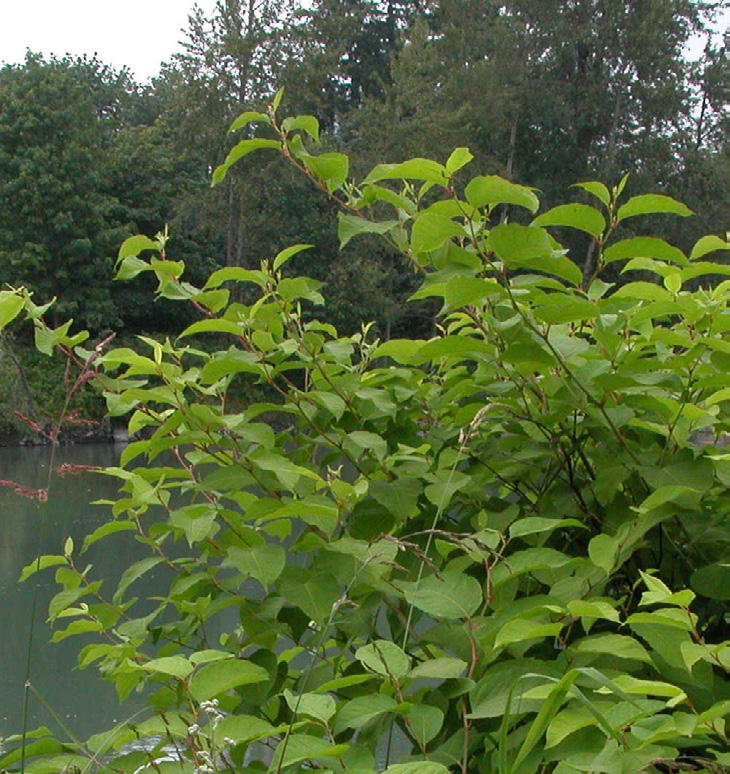
Japanese Knotweed
HighReynoutria japonica var. japonica
An extremely persistent perennial with bamboo-like hollow stems and creamy-white flower sprays in late summer. Its strong roots can damage pavement and foundations, and it is very hard to get rid of.
Invasive spreadChokes out nativesLate summer (in flower)View plant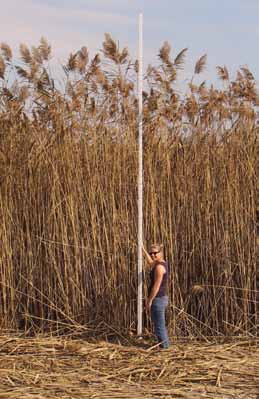
Phragmites (European Common Reed)
ModeratePhragmites australis subsp. australis
A very tall invasive reed that forms dense stands in wet areas and ditches. It has feathery seed plumes and blue-green leaves, and can grow taller than a person, crowding out wetland plants.
Invasive spreadChokes out nativesLate summer (plumes)View plant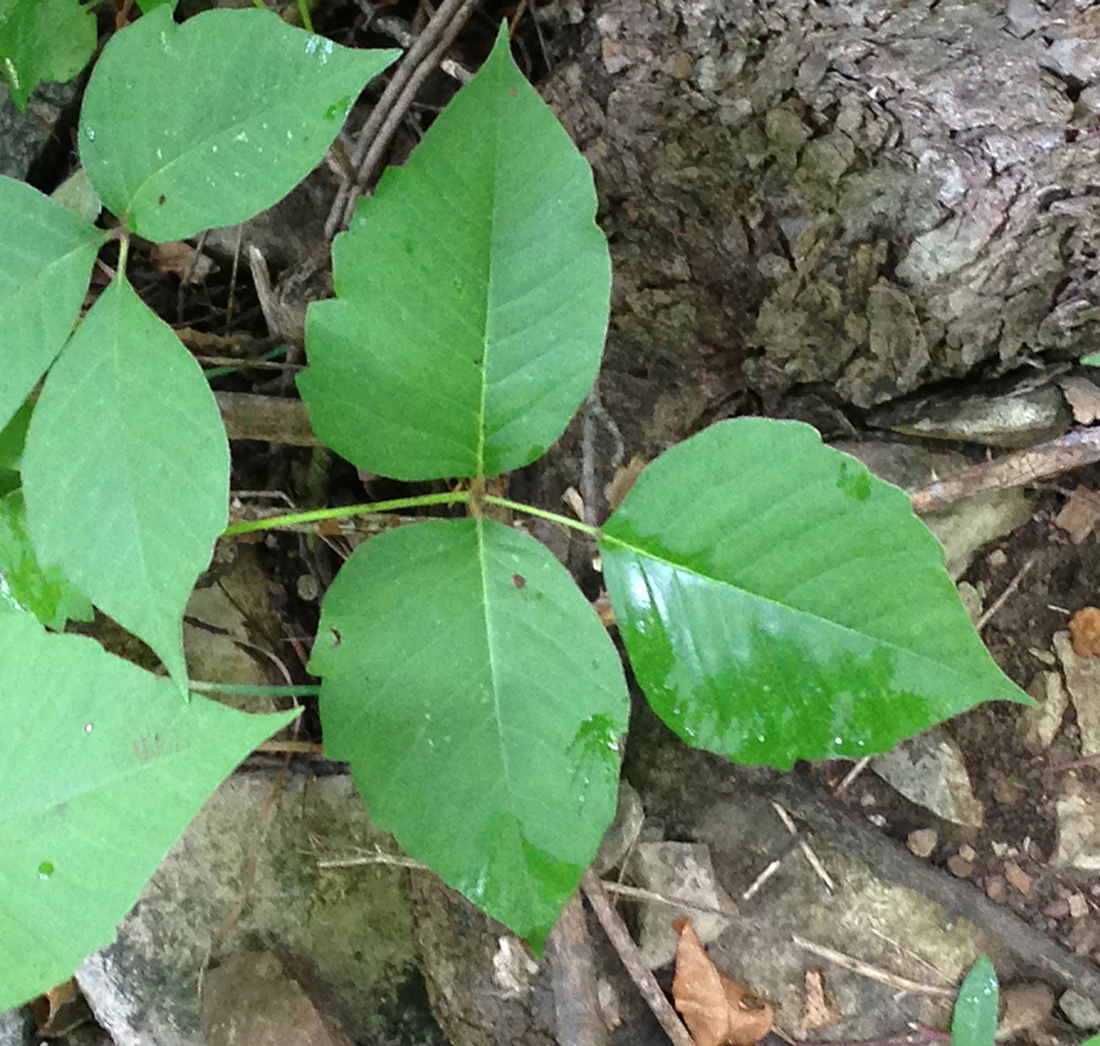
Poison Ivy
HighToxicodendron radicans
A native but prohibited plant known for the saying 'leaves of three, let it be.' Its oil (urushiol) causes an itchy, blistering rash on contact. It grows as a low plant, a small shrub, or a climbing vine.
Skin irritationSummer (clear three-leaflet pattern)View plant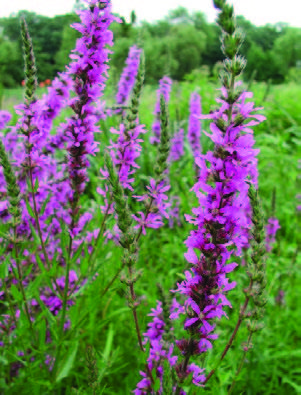
Purple Loosestrife
ModerateLythrum salicaria
A wetland invader with striking spikes of magenta-purple flowers in summer. It forms dense stands along ponds, ditches, and shorelines, crowding out native wetland plants.
Invasive spreadChokes out nativesSummer (in bloom)View plant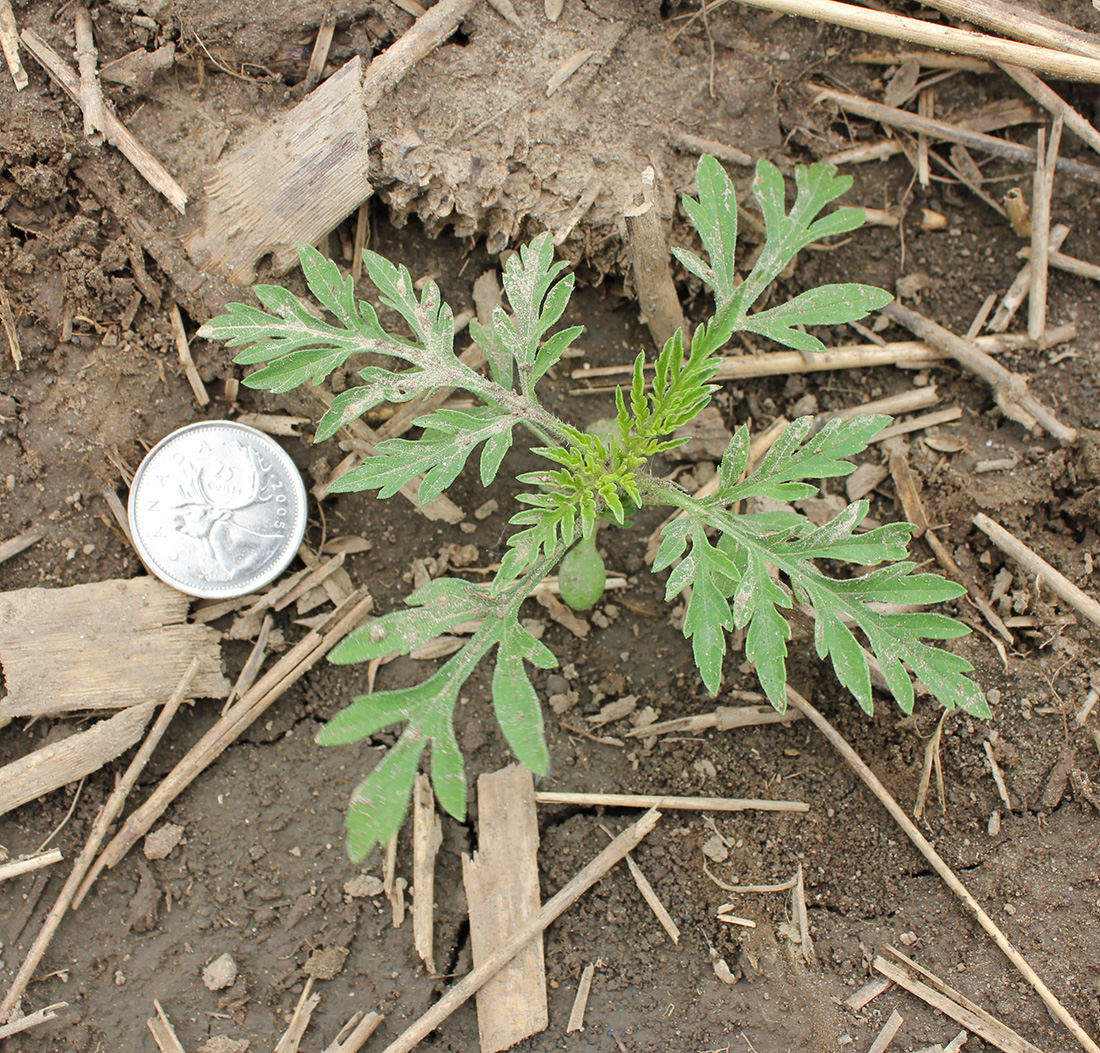
Ragweed (Common)
ModerateAmbrosia artemisiifolia
An inconspicuous annual weed that is a leading cause of late-summer hay fever. Its fern-like leaves and small green flower spikes release large amounts of allergenic pollen from August into fall.
Allergy riskLate summer (flower spikes)View plant
Need to report a prohibited plant?
If a prohibited plant is growing on a property, you can report it to the City through the official Toronto 311 service. For hazardous species like giant hogweed, keep your distance and let the City know.
Safety first. Some prohibited plants are hazardous. Giant hogweed sap can cause severe burns, and poison ivy causes a blistering rash — avoid direct contact and consider professional removal for hazardous species or large infestations.
Plant identification results are not a legal determination. Always confirm prohibited plant information using official City of Toronto resources. Species descriptions are provided for general education and may not reflect every variation in the field.
Plant photographs are reproduced for non-commercial public education and identification reference only. Sources include Ontario weed-identification (OMAFRA / Ontario CropIPM) and invasive-species fact-sheet materials; all image rights remain with their respective owners. If you are a rights holder with a concern, please contact us through the Feedback page.